
Babies and Toddlers
Toddler Bedtime Sensory Routine: Calming Ideas for Settling, Sleep, and Smoother Evenings
When bedtime feels like a second wind instead of a slow landing, a sensory routine can help. The goal is not to do more. It is to lower the load, repeat the same steps, and use calming input that helps your toddler feel organized enough to settle.
Why bedtime can be hard for sensory kids
Some toddlers do not wind down just because the clock says bedtime. They may still be carrying the sensory load of the whole day: bright lights, noise, transitions, clothing, hunger, movement needs, screen stimulation, or the emotional crash that hits once everything gets quiet.
Parents often describe bedtime as a mix of restlessness, clinginess, meltdowns, stalling, and a body that suddenly seems wide awake. That does not always mean you need a more elaborate routine. Usually it means bedtime needs to become more predictable, lower stimulation, and better matched to what your child finds calming.
The main goal
A bedtime sensory routine should help your toddler move from alert and active to calm and organized. Think less excitement, less novelty, and less back-and-forth. More repetition, slower pacing, and familiar cues.
A simple toddler bedtime sensory routine
This sample routine works well for many families because it follows a clear pattern: reduce input, meet body needs, then repeat the same settling steps every night.
-
Start slowing the house down 30 to 60 minutes before bed
Dim lights, turn off loud TV or fast music, and avoid exciting games. If screens are part of the evening, end them before the routine starts so your toddler is not switching from bright, fast stimulation straight into bed.
-
Do a short body-based calming activity
Many toddlers settle better after a little organized movement such as pushing a laundry basket, carrying pajamas to the bedroom, wall pushes, a slow pillow squeeze game, or a few calm animal walks. Keep it brief and steady, not wild.
-
Use warm, familiar care steps in the same order
Bath or wash-up, diaper or toilet, pajamas, brushing teeth, then books. The exact steps matter less than doing them in the same order most nights.
-
Add one calming sensory input your child genuinely likes
This might be lotion massage, rocking, cuddling under a regular blanket while reading, a quiet song, or slow back rubs. Pick one or two things that help. Too many steps can backfire.
-
Keep the final stretch quiet and boring
Bedtime usually goes smoother when the last 10 to 15 minutes are simple: one or two books, one song, lights low, short phrase, then bed. Save problem-solving and negotiations for daytime.
A useful bedtime script
Try the same short phrase each night: “Bath, pajamas, books, cuddle, bed.” When toddlers know what comes next, there is less room for surprise and less energy spent resisting each step.
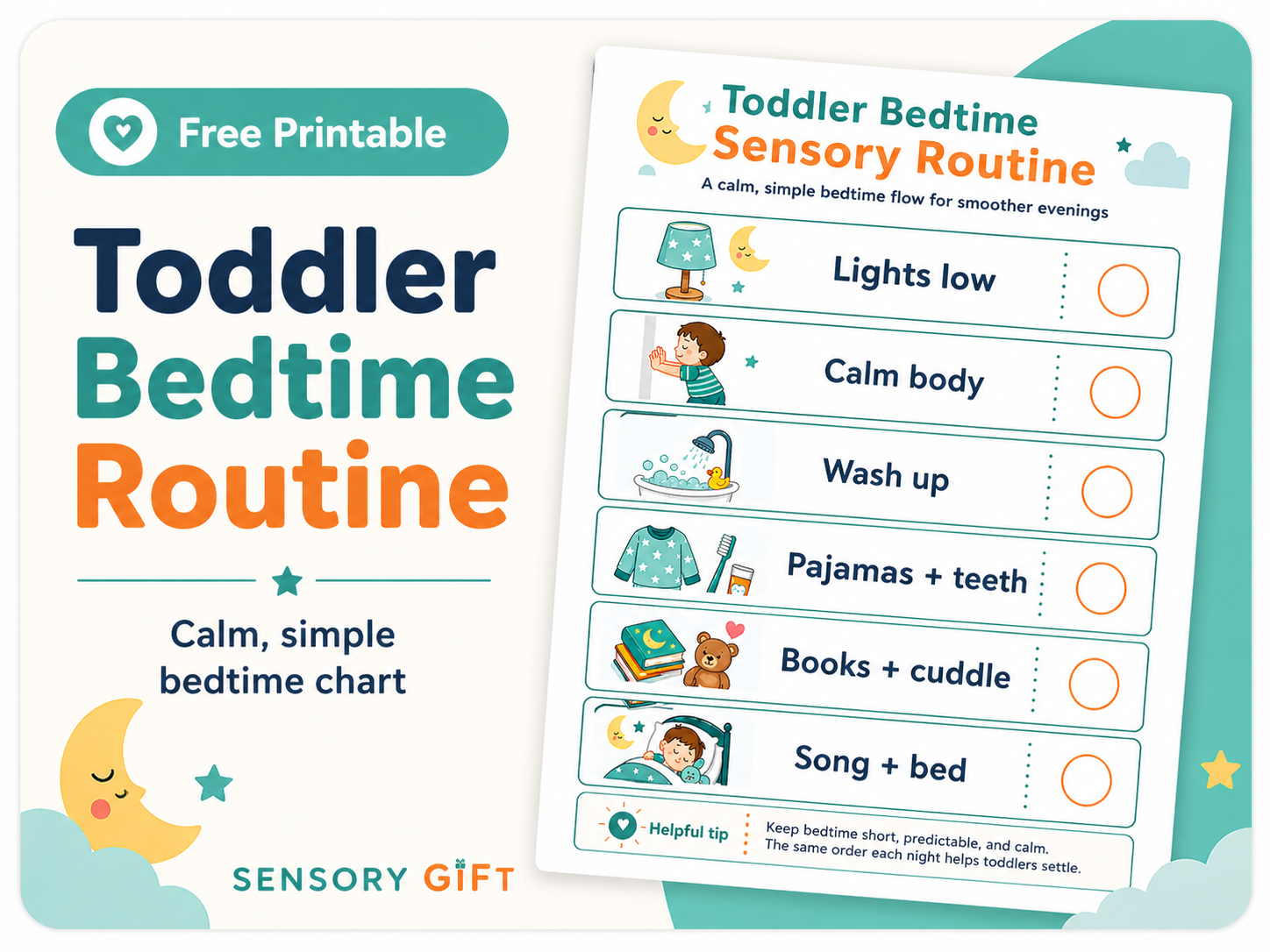
If your child does better with pictures than verbal reminders, a bedtime visual can help. A simple 4 to 6 step chart often works better than repeating directions over and over.
Try this simple bedtime routine chart
This printable chart is the fastest option when you want something ready to use right away. Open it, print it, and start using the same sequence each night.
Which bedtime visual tool should you use?
Bedtime routine chart
Use this when you want a simple bedtime sequence without setting anything up. It is a ready-made chart for families who want a quick visual support just for evenings.
Daily Visual Schedule
Use this when you want to move steps around, swap pictures, or build a bedtime routine that matches your own order. It is a better fit if your evening routine changes or you want one printable that can work across the whole day.
ViziCues
Use ViziCues when you want to build and save custom routines, adjust them easily, and reuse them for bedtime, mornings, outings, or transitions. It is the strongest option if you want an ongoing visual routine tool instead of a one-time printable.
Calming sensory activities before bed
The best calming activities are usually slow, predictable, and not too long. A good rule is to stop while your toddler still feels regulated, not after they tip back into silly or wild.
What about compression and deep pressure?
Some toddlers calm more easily with firm, steady pressure such as a snug cuddle, a short massage, or being tucked in with an ordinary blanket they can move freely. The key is that it should feel calming, not restrictive, and your child should always be able to move, communicate, and get out of the position easily.
If parents are considering weighted or compression products for sleep, it is worth getting personalized guidance first. Weighted items are not appropriate for babies, and the American Academy of Pediatrics says weighted blankets, weighted sleepers, weighted swaddles, and other weighted objects should not be placed on or near a sleeping baby. For toddlers, bedtime safety and fit matter more than buying a product that claims to be calming.
What to adjust when your toddler still cannot settle
If the routine is in place but bedtime is still rough most nights, step back and look for the pattern. Many toddler sensory sleep issues are not about one perfect trick. They are about finding the thing that is pushing bedtime off course.
If your toddler gets silly, wild, or more wired at night
- Start the wind-down earlier.
- Move active play earlier in the evening instead of right before bed.
- Shorten the routine so it does not drag on and become stimulating.
- Cut screens before the bedtime routine begins.
If your toddler melts down during pajamas, brushing, or bath
- Look for sensory triggers like wet hair, strong toothpaste, scratchy pajamas, bright bathroom lights, or fast transitions.
- Make one small change at a time: softer towel, dimmer light, warmer room, different toothbrush, fewer products, faster wash routine.
- Use a visual sequence so your child can see that the hard part ends and bed is next.
For daily care routines that often spill into bedtime stress, see Hair Washing, Tooth Brushing, and Hygiene Sensory Help.
If your toddler wakes hungry, uncomfortable, or upset
- Look at timing: bedtime may be too late, too early, or falling right after a chaotic stretch of the evening.
- Consider whether clothing seams, room temperature, dry skin, congestion, or digestion are making it harder to settle.
- Check whether evening snacks are helping or creating another struggle.
If food textures, mealtime battles, or limited eating are part of the evening pattern, read Toddler Food Texture Sensory Issues.
If bedtime turns into overload and big feelings
Sometimes what looks like a sleep problem is really an end-of-day sensory crash. Your toddler held it together, then fell apart once the day slowed down. In that case, focus on earlier regulation, simpler transitions, and less sensory demand across the evening, not just at the last minute. You may also find Toddler Meltdowns and Sensory Overload helpful.
A baby sensory calming routine
For babies, the routine should stay even simpler. Think feed, diaper, pajamas, dim lights, cuddle, song, and sleep. Babies usually need less stimulation, not more. Avoid overcomplicated bedtime activities and keep safe sleep front and center.
- Use low light and a calm voice.
- Keep the order similar from night to night.
- Watch for sleepy cues instead of pushing wake time too far.
- Put baby down on their back in a safe sleep space.
- Keep soft items, loose blankets, and weighted products out of the sleep space.
Some babies like gentle rocking, skin-to-skin contact, or a short lullaby before sleep. That can be soothing. The sleep space itself still needs to stay simple and safe.
What a realistic bedtime routine can look like
Here is one example for a toddler who needs movement, predictability, and a slower landing:
- 6:45 p.m. – lights lower, TV off, offer water
- 6:50 p.m. – carry pajamas to bedroom, 10 wall pushes, toilet or diaper
- 6:55 p.m. – wash-up or bath
- 7:05 p.m. – pajamas, lotion, teeth
- 7:10 p.m. – two books under a regular blanket with parent
- 7:18 p.m. – one song, cuddle, bed
This is just a model. Some toddlers need a shorter routine. Some need the bath earlier because it wakes them up. The best bedtime sensory routine is the one your family can repeat and your child learns to expect.
Frequently asked questions
What is a good toddler bedtime sensory routine?
A good routine is short, predictable, and calming. Many families do best with a simple order like wash-up, pajamas, teeth, books, cuddle, bed, plus one calming sensory input such as rocking, lotion massage, or firm cuddles.
What calming sensory activities help before bed?
Slow rocking, massage, wall pushes, carrying a small basket, slow breathing games, quiet songs, and dim-light books are common bedtime options. The best activities are steady and organizing, not fast or exciting.
Why does my toddler seem more hyper at bedtime?
Some toddlers look hyper when they are overtired, overstimulated, or struggling to shift from play into rest. Bright screens, late rough play, long routines, and too many transitions can all make bedtime feel harder.
Can compression or weighted products help my toddler sleep?
Some children find firm pressure calming, but bedtime safety comes first. Weighted products are not for babies, and anything used near sleep should be approached carefully and with individualized guidance when needed. Simple calming input, consistent routine, and a comfortable sleep setup are usually a better starting point.
What is a baby sensory calming routine before bed?
For babies, keep it simple: feed, diaper, pajamas, dim lights, cuddle, short song, and sleep. The routine should feel calm and repetitive, and the sleep space should stay clear and safe.
This page is for educational purposes and is not medical advice. If your child has persistent sleep trouble, snoring, breathing concerns, reflux, eczema discomfort, or bedtime distress that feels extreme, talk with your pediatrician or a qualified clinician.