
SensoryGift · all-ages sensory toy guide
Sensory Toys: Types, Examples & How to Choose
Sensory toys, without the overwhelm. Explore the main types of sensory toys, see practical examples, and find a safer, more useful fit for babies, kids, teens, or adults. Start with the person’s sensory preference and the setting—not a trending toy.
Already know the age? Jump to baby, toddler, kids, teens, and adult guides.
Shopping disclosure: some of our linked product guides include affiliate links. SensoryGift may earn a commission from qualifying purchases; your cost does not increase.
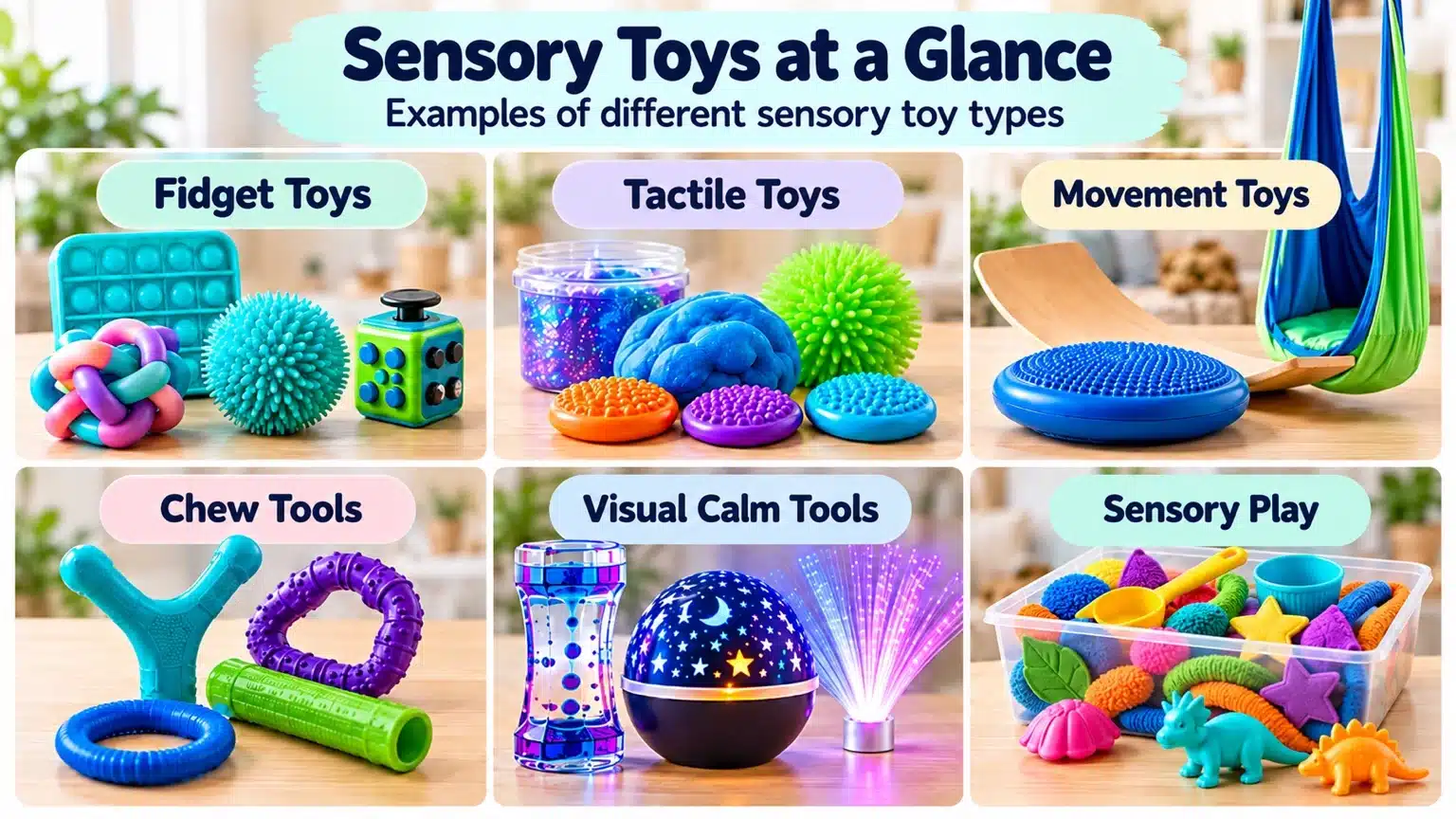
What are sensory toys?
Sensory toys are objects or play materials that provide sensory experiences through touch, movement, sound, sight, or body and mouth input. Familiar examples include textured balls, pop fidgets, putty, balance stepping stones, and sealed sensory bottles. Some are made for play; others are better described as sensory tools or environmental supports.
People may enjoy sensory toys for exploration, comfort, hand activity, movement, or a more predictable sensory experience. A toy that helps one person feel settled can be distracting or unpleasant to someone else. Sensory needs also change with time, place, fatigue, and personal preference.
Short answer: Start with a sensory preference (for example, squeezing, rocking, or textured touch), choose a tool that suits the person’s age and setting, check safety, and try one thing at a time. Our free sensory toy finder can help you narrow the possibilities.
Sensory toys are not the same as sensory therapy. They may be useful everyday supports, but no toy reliably treats autism, ADHD, anxiety, or sensory processing differences. Enjoyment, accessibility, comfort, and the person’s own feedback matter more than marketing claims.
12 sensory toy examples and what each one offers
From quiet hand fidgets to movement equipment, these 12 examples show how different sensory toys can be. They are types of items—not universal recommendations or a ranked shopping list. Check age labels, materials, supervision needs, and how someone uses an item before choosing.
Soft squeeze balls
Repeated squeezing and releasing gives predictable hand input during desk breaks or waiting. Compare different sensory ball textures and designs, and look for washable, leak-resistant, age-appropriate materials.
Pop fidgets
Pushing and releasing each bubble offers repetitive feedback. As with other fidget toys, the feel and noise vary; quieter versions may be better in shared spaces.
Textured stones and quiet sliders
Small hand tools can provide subtle touch and movement without lights or loud clicks, making them practical at school or work. Quiet fidget options include different textures and motions, but small objects are unsuitable when swallowing is a risk.
Therapy putty or sensory dough
Pressing, stretching, rolling, and shaping sensory dough can offer seated tactile exploration. Check ingredients and texture preferences, and avoid materials the person might eat.
Textured balls and fabric toys
Different surfaces invite touching, grasping, rolling, or squeezing. If the person prefers dry textures, begin with predictable fabrics or sturdy textured balls; our guide to tactile sensory input explains why texture preferences vary.
Stepping stones and balance paths
Stepping and balancing can offer movement and body-position feedback. If you are comparing stepping stones and balance beams, check the floor surface, grip, spacing, and supervision requirements.
Body socks and resistance play
Stretchy resistance may provide satisfying body feedback for someone who welcomes it. Before trying a sensory body sock, consider sizing, easy exit, heat, comfort, and supervision.
Purpose-made handheld chew tools
Purpose-made oral sensory tools are designed for appropriate chewing, unlike random toy parts or clothing. Choosing the right size, considering chewing strength, and inspecting for damage are essential.
Sealed sensory bottles and liquid timers
Slow-moving visual activity can be enjoyable for someone who wants a quiet visual pause. Our guide to visual sensory input explains why brightness and motion preferences differ. Choose durable, sealed products and stop using anything that leaks or cracks.
Rattles and simple sound toys
Shaking or tapping creates a clear cause-and-effect sound. For infant play, choose an appropriately labeled toy at a comfortable volume; the baby sensory-toy guide covers age-specific choices and supervision.
Scoops, cups, and sensory-bin tools
Scooping, pouring, and sorting can be engaging with suitably sized materials. Start with easy-clean, supervised sensory-bin activities; loose beads or tiny fillers are not required.
Marble mazes and enclosed tracking toys
Guiding an object along a defined path combines quiet hand movement with visual tracking. Choose enclosed, durable designs without accessible small parts and check whether the motion feels pleasant rather than distracting.
Want named products, comparisons, or buying links? Explore sensory picks by need or choose an age-specific buying guide. Start with the kind of input that fits, then use a more specific guide when you are ready to compare products.
Types of sensory toys: match the kind of input
Sensory input categories overlap. A textured ball might offer touch and hand pressure; stepping stones can involve balance and body awareness. These categories are a way to navigate options, not boxes a person must fit into.
Fidget and hand-input toys
Many fidget toys provide repetitive popping, twisting, squeezing, sliding, or rubbing for busy hands. Noise, resistance, and texture all matter, especially if you need quiet hand tools for shared spaces.
Tactile sensory toys
Putty, fabrics, textured balls, and supervised tactile play offer different kinds of tactile input. Someone who dislikes sticky textures may prefer dry, predictable surfaces.
Movement and balance toys
Stepping stones, balance paths, and rockers combine play with movement and vestibular input. Different balance tools need different amounts of space, setup, and supervision.
Heavy-work and resistance tools
Pushing, pulling, stretching, and squeezing are forms of sensory input that involve muscle-and-joint feedback. A body sock or other resistance activity feels different from a desk fidget, so choice, fit, and easy exit matter.
Oral sensory tools
Purpose-made chewing items require their own hygiene, fit, durability, and supervision checks. Start with the oral sensory tools guide before considering specific chew-tool options.
Visual and sound-based toys
Sealed visual timers, gentle cause-and-effect sound toys, and slow-moving bottles suit some people but overwhelm others. Consider the amount of visual input and whether changing the surrounding sensory environment would help more.
Not everything helpful is a toy. Noise-reducing headphones, dimmer lighting, visual schedules, and a quieter room are often better described as accommodations or supports. If someone is overloaded, reducing input may help more than offering another sensory object.
How to choose a sensory toy by need
Don’t start with a diagnosis or an Amazon bestseller list. When choosing a sensory gift or daily-use toy, start with a behavior, preference, or difficult moment. Ask what input the person wants—or what input they want to escape—and give them choice whenever possible.
| What you notice | Reasonable starting options | What to check |
|---|---|---|
| Hands are constantly busy; waiting feels hard | Squeeze ball, smooth slider, textured stone, quiet pop tool | Noise level, hand comfort, small-part and chewing risks |
| Seeks climbing, pushing, jumping, or strong body input | Stepping stones, safe movement path, resistance activity, body sock when appropriate | Floor surface, space, equipment limits, easy exit and supervision |
| Enjoys textures but rejects wet or sticky play | Dry tactile toys, textured balls, fabric swatches, firm putty only if welcomed | Offer preferred textures first; never force messy touch |
| Chews sleeves, pencils, or toy parts | Correctly sized purpose-made handheld chew tool; individualized advice for persistent unsafe chewing | Chewing force, damage, cord risks, hygiene and safe use |
| Sound or bright light feels overwhelming | Reduce noise/glare first; perhaps a familiar quiet hand toy if wanted | Avoid adding flashing, noisy or unpredictable stimulation |
| Wants a quiet visual pause | Sealed slow-moving visual bottle, simple low-brightness visual object | Leaks, breakage, brightness, visual motion sensitivity |
The 60-second sensory-toy fit test
- What input? Touch, pressure, movement, mouth input, visual activity—or less input?
- Which moment? Desk work, downtime, waiting, transition, play, or a movement break?
- What boundaries? Age, mouthing, sound, space, independence, supervision, and budget?
- What does the person prefer? Offer one easy-to-decline option. Keep it only if it is comfortable and helpful in real life.
Not sure? Try the Sensory Toy Finder Quiz. It’s a starting-point tool—not a medical assessment or a promise that a given product will work.
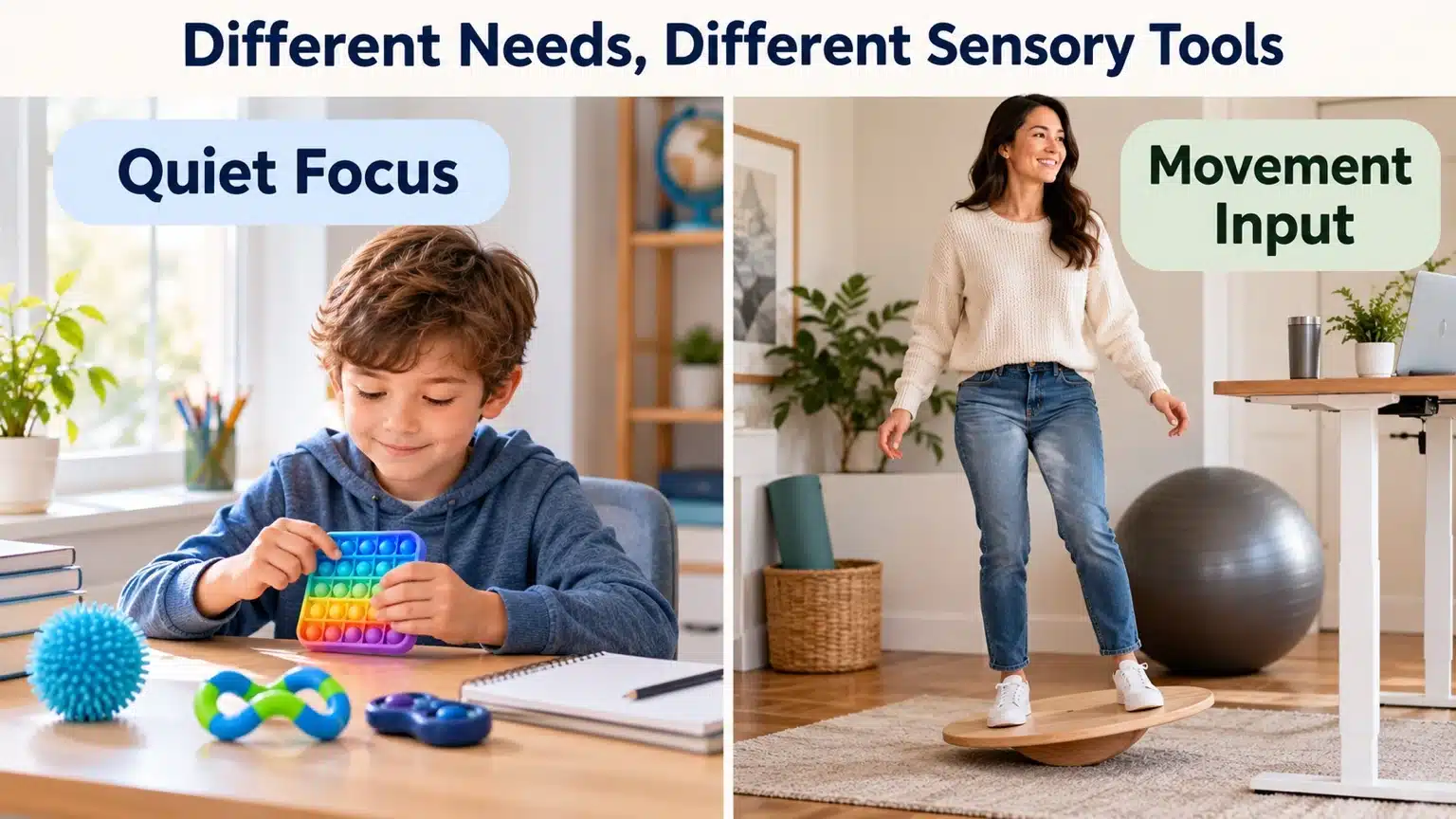
Sensory toy guides by age: babies, toddlers, kids, teens, and adults
The same toy may be safe and enjoyable for one person but poorly suited to another. Age is a useful safety starting point, not a complete picture. Account for motor skills, chewing, preferences, communication, and whether the product feels age-respectful.
Babies · birth to 12 months
Choose simple, age-labeled, supervised toys for looking, grasping, shaking, and safe tactile exploration. Our sensory toys for babies guide explains what to consider, while the baby toy comparisons cover specific products. Skip small parts and loose sensory fillers.
Toddlers · ages 1–3
Think chunky, durable, washable, and easy to supervise: textured balls, stacking cups, simple pop toys, and movement paths. Read the sensory toys for toddlers guide for age-specific considerations, or browse the toddler toy buying guide when comparing products.
Kids · approximately ages 4–12
Choose for the actual environment: quiet school tools, active home play, travel, tactile exploration, or a small calming kit. Our sensory toys for kids guide covers daily use, with separate product comparisons for kids and considerations for autistic children.
Teens
Respect privacy, style, choice, and independence. Some teens like visible fidgets; others prefer unobtrusive hand input. See sensory toys for teens for everyday use or our teen-specific toy comparisons when shopping.
Adults
Office-safe fidgets, tactile objects, at-home movement, and comfort tools can be useful well beyond childhood. The sensory toys for adults guide focuses on personal preference and setting, while the adult buying guide compares options.
Choosing a gift rather than a daily tool? Read how to choose a sensory gift or explore sensory shopping picks by need. Those guides go deeper into age-specific needs, while this page helps you compare the options across ages.
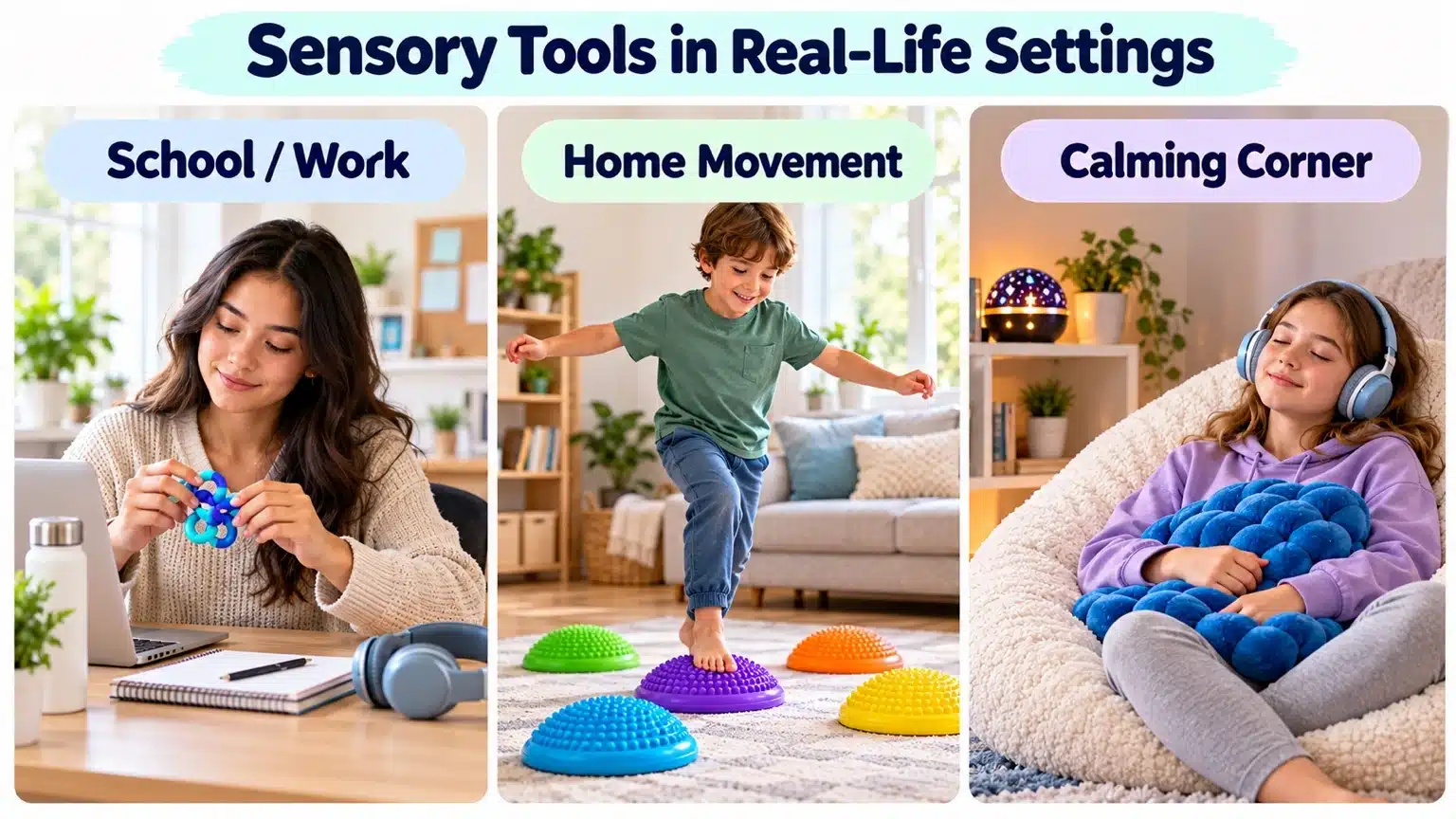
The best sensory toy also fits the setting
School, studying, and offices
Quiet, washable, low-mess tools are often more practical than flashing or clicking toys. A soft squeeze object, quiet slider, or textured stone may be suitable when safe for the person; compare quiet fidget toys for shared spaces to see how the options differ. Check school or workplace rules, and consider whether a movement break would help more.
Home play and movement breaks
There may be more room for stepping stones, body awareness play, tactile exploration, or a calm space. When planning a sensory-friendly space, choose suitable equipment, safe surfaces, and appropriate supervision rather than filling a room with products. If considering resistance activities, check whether a body sock would suit the person and allow an easy exit.
Travel, appointments, and waiting
A familiar, small, low-noise toy that is easy to clean can be more useful than a large activity kit. Avoid loose parts, leaky toys, and materials you cannot manage safely on the go.
Overload and recovery
First ask whether the person wants less noise, light, touch, or social demand. A sensory object may be welcome, or it may be one more thing to process. During sensory overload, respecting a refusal and reducing demands can matter more than introducing another toy. Our calming strategies guide explores other ways to support recovery.
Sensory toy safety: what to check before buying
A toy described as “sensory” is not automatically safer or more appropriate. Match it to the person’s age and actual behavior—including mouthing, chewing, throwing, tearing, climbing, and independent use.
High-priority safety checks
- Small parts, magnets, and button batteries: keep dangerous components inaccessible to young children and anyone likely to swallow objects. Look for securely contained components and follow age warnings.
- Water beads: these can expand if swallowed and cause serious internal injuries. Keep loose water beads out of spaces where young children may be present and away from anyone who might put them in their mouth. The 2026 U.S. federal safety standard does not eliminate all risks.
- Chew and mouth tools: choose items specifically designed for their intended oral use; follow manufacturer guidance, inspect frequently, and discard damaged products. Be especially cautious with strings or neck-worn items.
- Squishy, slime, putty, and filled toys: check for leaks, tearing, hazardous fillers, allergen considerations, and possible ingestion. Never heat a squishy toy.
- Movement equipment: use on suitable surfaces, within the manufacturer’s limits, with sufficient clear space and supervision. Equipment that restrains the body needs an easy exit.
- Babies and toddlers: age ratings, choking warnings, awake supervised play, and keeping toys out of sleep spaces are essential. Avoid weighted items for infant sleep.
Safety references: US CPSC water bead safety standard (2026) and US CPSC squishy toy safety alert (2026). Product warnings and recommendations can change; follow current manufacturer guidance.
Try a sensory toy without buying a dozen things
One meaningful trial beats a pile of random products. A quick way to judge usefulness is to notice how someone responds rather than assuming a toy should have a particular effect.
- Try a low-cost or familiar option first. For example, squeeze a suitable soft ball or choose a quiet movement break. Not every sensory need requires shopping.
- Offer choice, not pressure. Let the person handle or decline the object when possible. Try it during a comfortable moment before relying on it during a hard one.
- Notice the actual result. Does the person ask for it again? Is it comfortable, usable, and safe? Does it make the setting easier, or does it add noise and frustration?
- Keep or change one thing. If the toy fits, make it easy to access in that setting. If it doesn’t, change the texture, input, intensity, or context rather than forcing it.
Our editorial approach: we prioritize realistic daily-life use, choice, age respect, and safety over miracle claims or trends. This page guides toy categories; our specialized guides compare specific items. Learn more about SensoryGift’s editorial policy.
Frequently asked questions about sensory toys
What counts as a sensory toy?
A sensory toy provides an experience through touch, movement, sight, sound, or other sensory input. Examples include textured balls, squeeze toys, pop fidgets, tactile dough, movement toys, simple rattles, and sealed sensory bottles. Some helpful sensory supports—like noise-reducing headphones—are not really toys.
Are sensory toys only for autistic children?
No. Babies, kids, teens, and adults may enjoy sensory toys, whether or not they have a diagnosis. Autistic people and people with ADHD may have particular sensory preferences, but there is no one toy that suits every autistic or ADHD person. Start with the individual’s needs and preferences.
What is the difference between sensory toys and fidget toys?
Fidget toys are one group within the wider category of sensory toys. Fidgets usually provide repetitive hand input, while other sensory toys offer movement, body resistance, sound, visual activity, oral input, or multi-sensory play. See our fidget toys guide.
Is bubble wrap a sensory toy?
Bubble wrap offers a tactile and auditory popping experience, but ordinary packaging bubble wrap is not designed or safety-rated as a toy. It may tear or create unsafe pieces, especially around younger children and people who mouth objects. A purpose-made, age-appropriate pop toy is a more practical reusable option.
Which sensory toys are best for focus or ADHD?
Some people prefer quiet squeeze toys, textured objects, low-noise sliders, or brief movement breaks. Others find a hand toy distracting. Test one option in the real setting rather than assuming any fidget improves attention. Compare quiet fidgets.
What are good sensory toys for adults?
Age-respectful options might include subtle textured objects, silent hand fidgets, squeeze tools, appropriate movement options, or simple visual tools at home. The right fit depends on the person’s preferences and where they’ll use it. Read sensory toys for adults or compare adult product picks.
Can sensory toys stop or prevent meltdowns?
There is no reliable toy that prevents meltdowns. A preferred sensory object may be one part of someone’s regulation and recovery supports, but reducing demands, making environments more predictable, and respecting sensory boundaries often matter just as much. Do not force an unwanted sensory tool during distress.
How many sensory toys do I need?
Often just a few carefully chosen options. Start with one familiar toy for a specific situation and expand only when there is a meaningful need. A smaller selection can make choosing easier and reduce clutter, expense, and cleanup.