
Sensory regulation guide
Calming Strategies for Kids: A Practical Sensory Guide for Home, School, and Big Feelings
When a child is overwhelmed, a long lecture usually will not help. This guide gives you simple calming strategies, sensory tools, and a printable choice chart so kids can find a safer way back to calm.
A simple 3-step calming plan
Calming strategies work best when they are simple, practiced ahead of time, and easy to see in the moment. A child who is already flooded may not be able to explain what they need, choose from ten options, or follow a brand-new coping skill. Start with a small plan.
Lower the demand
Use fewer words, soften your voice, reduce noise or visual clutter, and pause non-urgent instructions. The first goal is safety, not teaching a lesson.
Offer one or two choices
Try a short choice like, “Squeeze pillow or quiet corner?” Too many choices can feel like more work when the nervous system is overloaded.
Practice when calm
Use the printable during ordinary moments so the child learns what each strategy feels like before they need it during a hard moment.
Safety note: If a child may hurt themselves or someone else, focus on immediate safety and get professional support. Sensory tools can support regulation, but they are not a replacement for medical, mental health, occupational therapy, or crisis care when those are needed.
What to do before, during, and after overwhelm
The biggest mistake is waiting until the meltdown, shutdown, panic, or big refusal is already happening. Most calming strategies are easier to use before a child hits the top of the stress curve.
| Moment | What it can look like | Helpful response | Try this |
|---|---|---|---|
| Before overwhelm | More fidgeting, covering ears, faster talking, pacing, clinginess, silly behavior, avoiding a task. | Act early. Add a support before the child has to prove they are struggling. | Heavy work, quiet headphones, visual schedule, first-then board, movement break, snack or water check. |
| During overwhelm | Crying, yelling, freezing, bolting, hiding, refusing, aggression, or not being able to answer questions. | Reduce words and demands. Offer safety, space, and one calm choice. | Dim lights, reduce noise, deep pressure if welcomed, quiet corner, slow rocking, breathe together. |
| After overwhelm | Tired, embarrassed, hungry, clingy, quiet, or ready to move on quickly. | Repair gently. Do not turn recovery into a long lecture. | Water, snack, simple reset routine, short reflection, choose one strategy to try earlier next time. |
How to choose the right calming strategy
A good strategy should match the child, the setting, and the size of the stress. Instead of asking, “What should calm a child?” ask, “What does this child need right now?”
Use this quick matching guide
- If the child is loud, fast, and crashing: try heavy work, deep pressure, wall pushes, animal walks, or carrying something useful.
- If the child is covering ears or melting down in busy places: lower sound, move away from the crowd, use headphones, or choose a quieter route.
- If transitions are the problem: use a visual schedule, first-then board, countdown, transition object, or the same short phrase each time.
- If bedtime is the problem: reduce light, make the order predictable, add slow pressure input, and avoid high-energy sensory play right before sleep.
- If the child shuts down: use fewer words, give space, offer a visual choice, and let recovery happen before asking questions.
Keep the calming menu small
Start with three to five strategies the child already tolerates. A giant list can look helpful to adults but feel impossible to a child who is overwhelmed. Once the favorites are familiar, add more.
Do not force a sensory strategy
Deep pressure, hugs, scents, movement, and sounds can be calming for some people and irritating for others. Watch for body language. If the child pulls away, says no, freezes, gets louder, or looks more distressed, stop and try a lower-demand option.
Calming strategies for different settings
At home
Create one predictable reset spot with a few tools: soft seating, a visual choice chart, headphones, a fidget, a pillow to squeeze, and a simple routine for coming back.
At school
Keep options discreet and quick: chair push-ups, wall pushes, quiet box, hand squeezes, visual breathing card, water break, or a short errand that adds heavy work.
In public
Pack a tiny calming kit: headphones, chewy or safe snack if appropriate, sunglasses or hat, small fidget, visual card, and one exit plan if the place becomes too much.
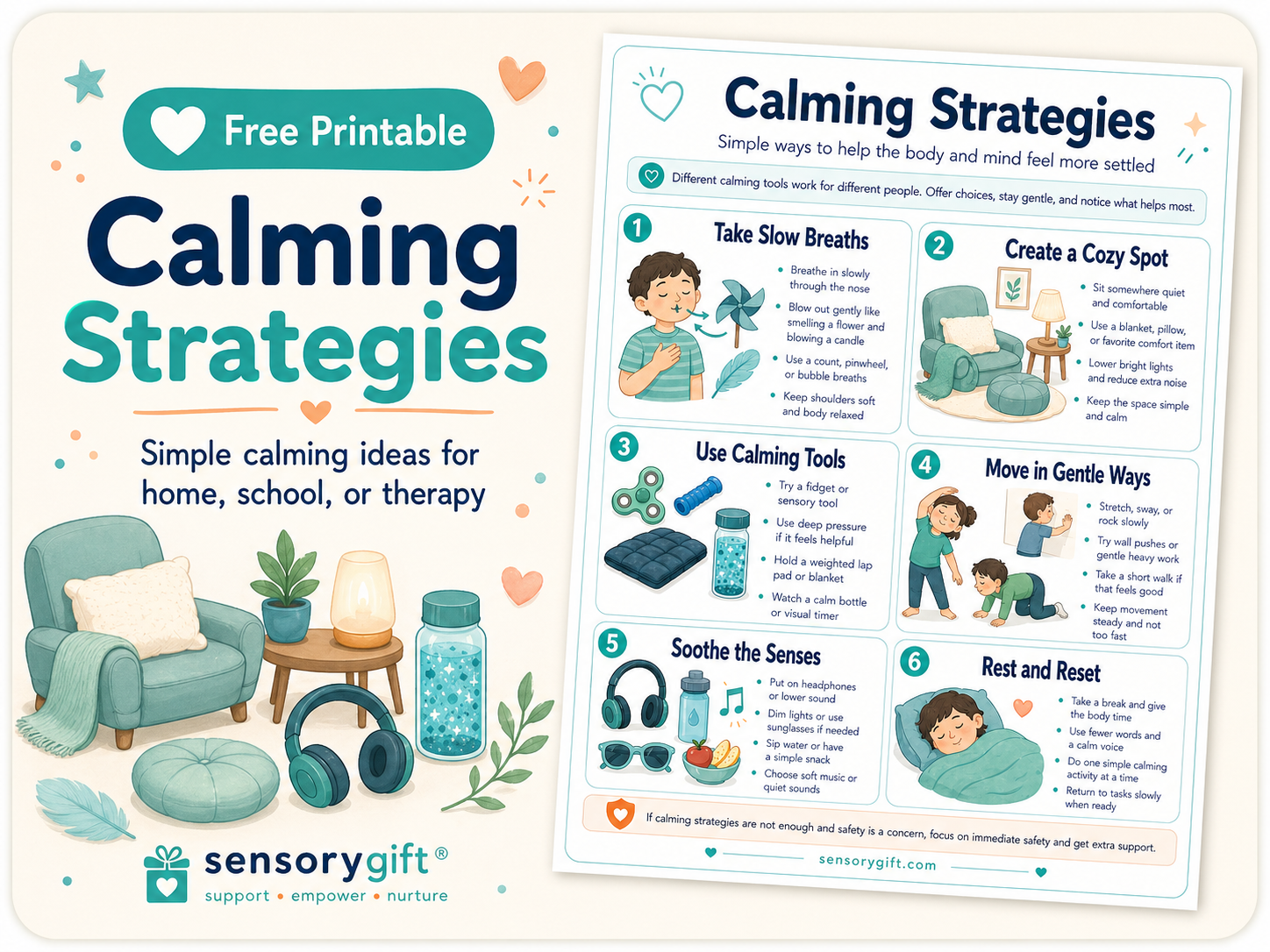
Free printable
Calming Strategies Printable
Print this calming strategies chart and place it where kids can actually use it: a calm corner, refrigerator, therapy room, classroom reset area, or inside a travel folder.
- Use it as a choice board during calm practice.
- Point to two choices during a hard moment instead of explaining every option.
- Circle or mark the strategies that work best for your child.
How to use this in a calm corner
A calm corner should not feel like a punishment spot. It works better as a practice space, reset space, or cozy place to return to before the day falls apart.
- Keep it simple: one soft place to sit, one visual, and a few tools are enough.
- Practice outside of meltdowns: let the child explore the space when they are already calm.
- Use neutral language: try “Your body looks like it needs a reset” instead of “Go calm down.”
- Make leaving clear: show what happens after the reset with a first-then board or short visual schedule.
For a fuller setup, visit the calm down corner printable tools guide.
Age notes: toddlers, kids, teens, and adults
| Age or stage | What usually helps | What to avoid |
|---|---|---|
| Toddlers and preschoolers | Pictures, songs, sensory routines, soft pressure, fewer words, predictable steps. | Expecting them to explain feelings during the peak of distress. |
| School-age kids | Choice charts, heavy work jobs, quiet corners, movement breaks, simple breathing visuals. | Using calming tools only after behavior has escalated. |
| Teens | Discreet tools, privacy, headphones, walks, scripts, body-based strategies, control over choices. | Babyish visuals, public correction, or forcing a strategy in front of peers. |
| Adults | Environmental changes, deep pressure, breaks, sound control, predictable routines, recovery time. | Treating sensory overload like a motivation problem. |
FAQ
What is the best calming strategy for sensory overload?
The best strategy depends on the person and the trigger. Many people benefit from lowering sensory input first, then adding a regulating input such as deep pressure, heavy work, slow movement, quiet, or a visual choice. The key is to test strategies when calm so you know what helps before a hard moment.
Are calming strategies the same as discipline?
No. Calming strategies help the nervous system return to a more regulated state. Discipline, teaching, repair, and problem-solving go better after the child is safe and calm enough to process what happened.
How do I know if a strategy is helping?
Look for a softer body, slower breathing, less frantic movement, fewer escape behaviors, more flexible thinking, or an easier return to the routine. If the strategy increases distress, stop and try something gentler.
Should I use a calm corner during a meltdown?
A calm corner can help if it feels safe and familiar. It should not be used as a threat or punishment. Practice using it during calm moments first, then offer it as one option during overwhelm.
Can adults use these calming strategies too?
Yes. Adults often use the same categories in more discreet ways: noise control, predictable routines, pressure, movement, lighting changes, breaks, and recovery time after overwhelming environments.