
Free ready-made printable
Free Printable Visual Schedule Template with Movable Activity Tiles
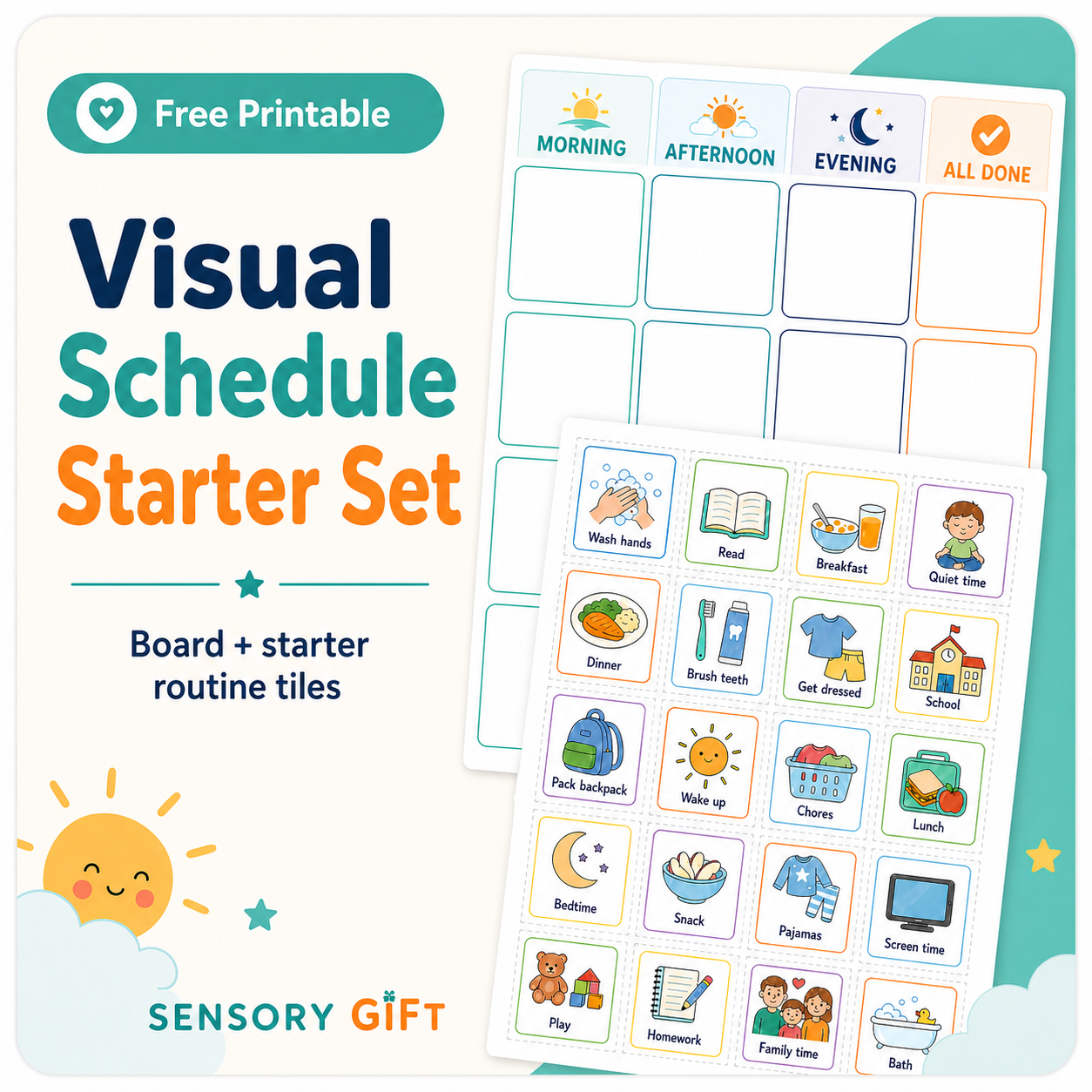
Download a free visual schedule template with a daily routine board and starter activity tiles you can print, cut, and move by hand. Use the ready-made PDF at home, in preschool or classrooms, or as one visual support for autistic children and other people who benefit from tangible routine cues.
Need a custom schedule instead? Use ViziCues to build and edit your own routine, then use it on-screen or print, save as PDF/image, or share the finished schedule.
What you get
A simple visual schedule starter set you can print and use
This free PDF is intentionally small. It gives you a ready-made routine board and a starter set of common activity tiles so you can try a tangible visual schedule without designing a whole system first.
A physical place to keep the routine visible.
Common routine pictures you can cut out and arrange on the board.
Use the tiles loose or attach them with Velcro dots, magnets, or tape if that fits your setup.
Once printed, the schedule can stay visible without keeping a phone or tablet in the routine.
This page is for a ready-made template. If you are trying to understand visual schedules more broadly — what they are, how many steps to show, autism use, age-respectful visuals, common mistakes, or First-Then vs a fuller schedule — use the Visual Schedule Guide.
Who this format may fit
Use a tangible schedule when moving the cues is part of what makes the routine clear
A physical visual schedule is one format, not a rule. It can be useful when the person benefits from seeing the routine in one fixed place, touching or moving the activity cues, or using the support without a screen.
Home routines
Use the board for a morning routine, after-school sequence, hygiene routine, chores, meals, or bedtime.
Preschool or classroom routines
Use a short sequence for arrival, snack, centers, outside time, cleanup, bathroom, rest, or dismissal.
Autism visual support
Some autistic children and other visual learners use picture schedules as a shared reference for what is happening now and what comes next.
Do not assume more tiles are better. If the person is overwhelmed by a longer board, show fewer steps or use a First-Then board for only the current step and what follows.
Simple setup
How to use the printable visual schedule template
You do not need to prepare the whole day. Start with one real routine and make the board familiar before using it during a harder moment.
Choose one routine
Start with morning, bedtime, leaving the house, after school, hygiene, or another sequence that repeats often.
Print the board and activity tiles
Regular paper is enough to try the schedule. Cardstock or lamination can make it sturdier if you decide to use it regularly.
Choose only the tiles the routine needs
Keep the first version short. A beginner may understand three clear steps better than a board crowded with the entire day.
Keep the schedule where it can be seen
Review the sequence before the routine starts, then point back to it instead of relying only on repeated verbal reminders.
Move or remove finished activities if that helps
Some people like moving a finished tile to an all-done area. Others prefer leaving the whole sequence visible. Use the version that makes the routine easier to understand.
The schedule should serve the person, not the other way around. If moving tiles becomes distracting, leave them in place. If the whole board is too much, cover later steps. If the routine changes, update the visual instead of insisting the original plan must happen.
Everyday examples
Ways to use a printable visual schedule at home, preschool, or school
The template works best when it represents one understandable routine rather than becoming a giant list of everything that could happen.
Morning routine
Keep the board near the place where the routine actually happens, and show only the steps that need to stay visible.
Preschool or classroom routine
A short classroom visual schedule can show the next few parts of the day without requiring a full wall-sized schedule.
After-school routine
Use a physical board when the transition home is easier with a stable visual reference that stays in one place.
Bedtime or hygiene
For a repetitive routine, a short picture sequence can reduce how much of the plan has to be held in working memory.
Visual schedule icons + pictures
The free PDF includes starter activity pictures — not an endless icon library
The starter set includes a small group of common activity tiles so you can try the routine system without sorting through hundreds of pictures. That is useful for a simple first schedule, but it will not cover every custom routine.
When the starter pictures are enough
Use the free printable when the included activities match the routine closely enough and you want a fast, tangible setup.
When you need different pictures or wording
Build the exact routine in ViziCues when you need to customize activities, reorder steps, reuse routines, change visual presentation, or create a finished schedule that can also be printed or saved.
Looking for a blank visual schedule template? This free starter set is a ready-made board with starter tiles; it is not a fully blank editable design file. If the routine needs to be built from scratch, ViziCues is the custom-builder path. You can build the schedule there and then print or export the finished version.
Autism printable use
Can this be used as a free printable visual schedule for autism?
Yes, it can be used as one everyday visual support for an autistic child who benefits from picture cues and a tangible routine board. It is not an autism treatment, and a visual schedule is not automatically helpful for every autistic person.
Keep the visual meaning clear
Choose pictures the person recognizes, pair them with short consistent language, and avoid adding decorative detail that makes the schedule harder to scan.
Start with less if needed
A three-step routine or a First-Then board may be more useful than a fuller schedule when too much visible information is overwhelming.
Show changes instead of hiding them
If the routine changes, update the visual and keep whatever is still known visible. The goal is usable information, not rigid compliance with the original board.
For the broader questions — why visual schedules are used, different representations, autism/ADHD considerations, adults and teens, common mistakes, and how much to show — read the Visual Schedule Guide.
Print + prep
You can start with paper — laminating is optional
Do not let the prep become a barrier to trying the support. Print the PDF on regular paper first if that is easiest. If the schedule becomes part of everyday life, you can make it sturdier later.
Use regular paper or cardstock. Start with the simplest setup that lets you test the routine.
Cut
Cut out only the activity tiles you need first. Store the extras instead of crowding the board.
Attach if useful
Velcro dots, magnetic tape, or regular tape can make tiles movable. Lamination can help with durability, but none of those steps are required to begin.
Ready-made template or custom builder?
Choose by how much the schedule needs to change
This is not a “paper versus app” decision. The free template gives you a ready-made physical system. ViziCues gives you a custom schedule builder whose finished schedule can stay interactive or move off-screen as print, PDF, image, or a supported share.
Use this printable template when…
- You want a quick physical routine board.
- The starter activities already fit the routine well enough.
- Moving physical tiles is useful.
- You do not need to customize every activity or layout.
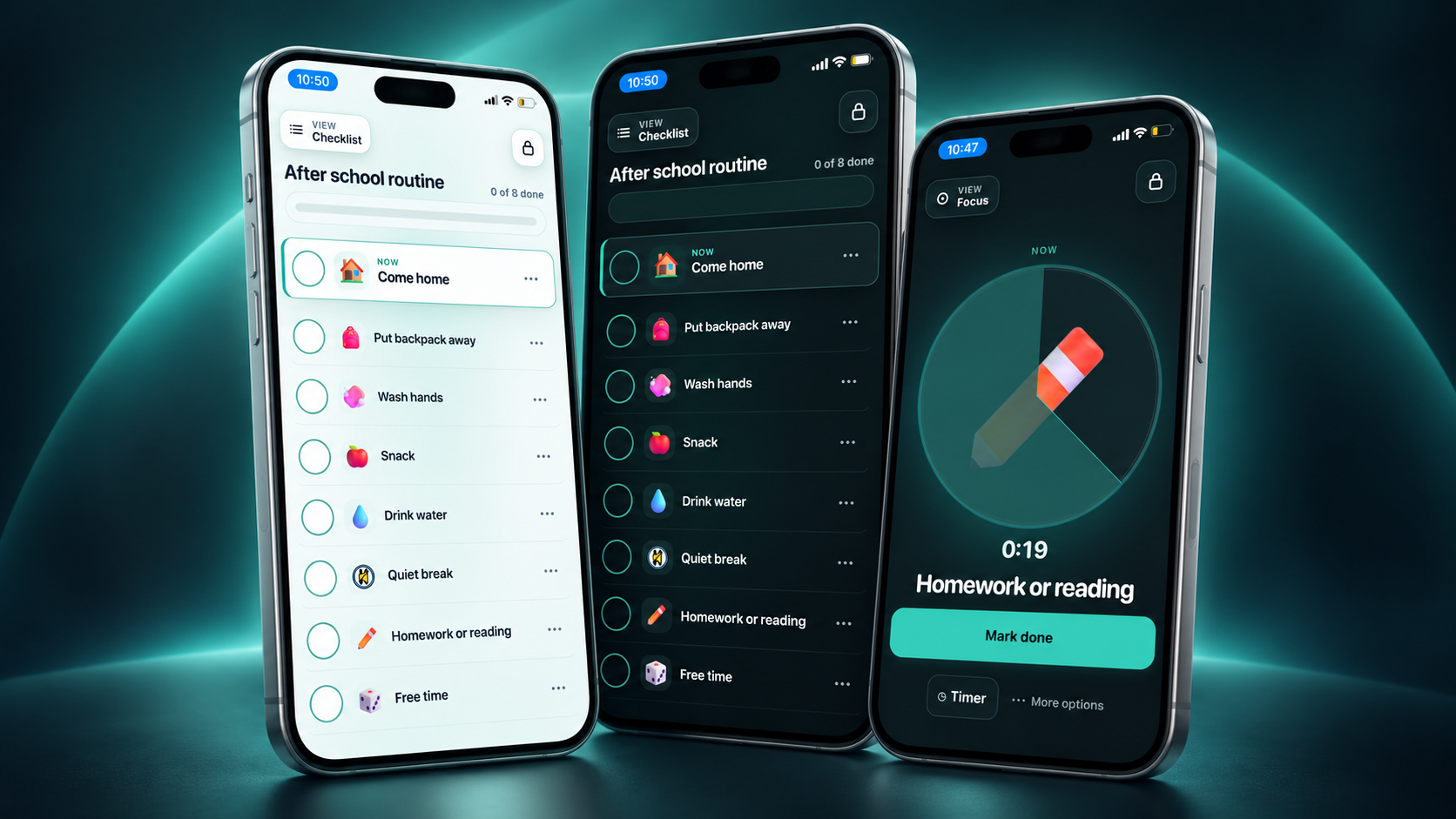
Use ViziCues when…
- You need to build the exact routine instead of starting from a fixed template.
- You want to edit, reorder, save, and reuse schedules.
- You want Checklist, Focus, First-Then, or visual time support.
- You want a custom schedule that can also be printed, saved as PDF/image, or shared.
You can use both. A movable physical template may be best for one routine, while ViziCues may be better for another routine that changes often or needs a custom printed version. The useful question is what kind of schedule-making workflow fits the moment.
Choose the next support
Need more than the template?
Use the resource that matches the question you are actually trying to answer.
Common questions
Free visual schedule template FAQ
These are the practical questions people usually have before downloading, printing, or deciding whether they need a custom schedule instead.
Is this visual schedule template really free?
Yes. The SensoryGift Visual Schedule Starter Set is a free PDF download with a printable routine board and starter activity tiles. No email is required to download the PDF.
What is included in the free visual schedule PDF?
The free starter set includes a printable daily routine board and a small set of common activity tiles. It is designed as a simple starting point rather than a large all-purpose picture library.
Can I use this as a free printable visual schedule for autism?
Yes. It can be used as one everyday visual support for an autistic child who benefits from a tangible picture schedule. Visual schedules are not useful for everyone, so adjust the number of steps, representation, and routine based on the person.
Can I use the printable visual schedule in a classroom or preschool?
Yes. A short board can be used for classroom or preschool routines such as arrival, snack, play, cleanup, bathroom, outside time, rest, and going home. Keep the visible sequence short enough to remain easy to scan.
Does the free printable include visual schedule icons or pictures?
It includes starter activity tiles with visual pictures for common routines. It is not a complete icon library. If your routine needs different activities, ViziCues is the custom-builder option.
Is this a blank visual schedule template?
Not fully. This is a ready-made printable board with starter activity tiles rather than a blank editable design file. If you need to create the exact routine from scratch, build it in ViziCues and then print or export the finished schedule.
Do I have to laminate the visual schedule?
No. Regular paper and tape are enough to try it. Lamination, cardstock, Velcro dots, or magnetic tape can make the schedule more durable or movable if you decide to use it regularly.
How do the movable visual schedule tiles work?
Print and cut the activity tiles, then arrange the ones needed for the routine. You can leave them loose, attach them with Velcro or magnets, or move finished tiles to an all-done area if that makes progress easier to see.
How many activity pictures should I put on the schedule?
There is no universal right number. Start with enough information to make the routine understandable without crowding the board. For a beginner, a few clear steps may work better than showing the entire day.
What if the visual schedule has too many steps?
Show less. Remove later tiles, cover part of the board, or use a First-Then board for only the current step and what follows. A visual support should reduce uncertainty, not become another wall of information.
What is the difference between this template and the Visual Schedule Guide?
This page is for downloading and using a ready-made printable template. The Visual Schedule Guide explains the broader concept, examples, autism and age considerations, common mistakes, and how to choose the amount and format of information.
Can I create a custom printable visual schedule instead?
Yes. Use ViziCues when you need to build the exact routine, edit or reorder activities, reuse schedules, or change the visual presentation. The finished schedule can be used interactively or printed, saved as PDF/image, or shared through supported device/browser tools.
Is ViziCues only a digital visual schedule?
No. ViziCues is a custom visual schedule builder. You can use the schedule on-screen, but the app is also built around finished outputs including print, PDF, image, and supported sharing.
Should I use this printable template or ViziCues?
Use the template when you want a ready-made tangible board and the starter activities fit. Use ViziCues when you need a custom routine that can be edited and reused. ViziCues can also create off-screen printable/PDF/image outputs, so the difference is ready-made versus custom — not simply paper versus screen.
What is the difference between a visual schedule and a First-Then board?
A visual schedule can show several steps in a routine. A First-Then board keeps only two pieces of information visible: the current step and what follows. Use the First-Then Board Guide when the moment needs less information.
Is the printable PDF available in Spanish or Chinese?
The current printable PDF is English. ViziCues supports English, Spanish, and Simplified Chinese interface options if you need a customizable app-based workflow.
Everyday support, not medical advice: SensoryGift printables and apps are practical visual-support tools. They do not diagnose or treat autism, ADHD, anxiety, sensory conditions, or any other medical or mental-health condition, and they do not replace individualized professional guidance.