
Sensory gift ideas by age and stage
Not every sensory gift fits every age. Start with the age range, then choose ideas that match their everyday life: play, school, work, home, travel, or wind-down time.
Choose the age range first
Each guide is built around what usually matters most at that stage: safety for little ones, play and regulation for kids, discreet support for teens, and useful everyday comfort for adults.
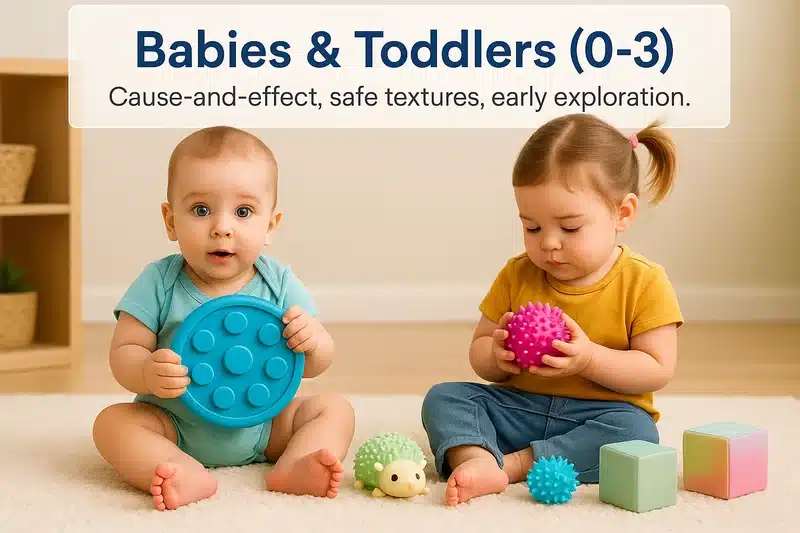
Babies and Toddlers
Best for supervised exploration, simple cause-and-effect toys, beginner movement, and gentle sensory play.
Common gift wins- Soft textures and easy-to-clean sensory toys
- Gentle movement and climbing support
- Simple visual or sound toys that are not too intense
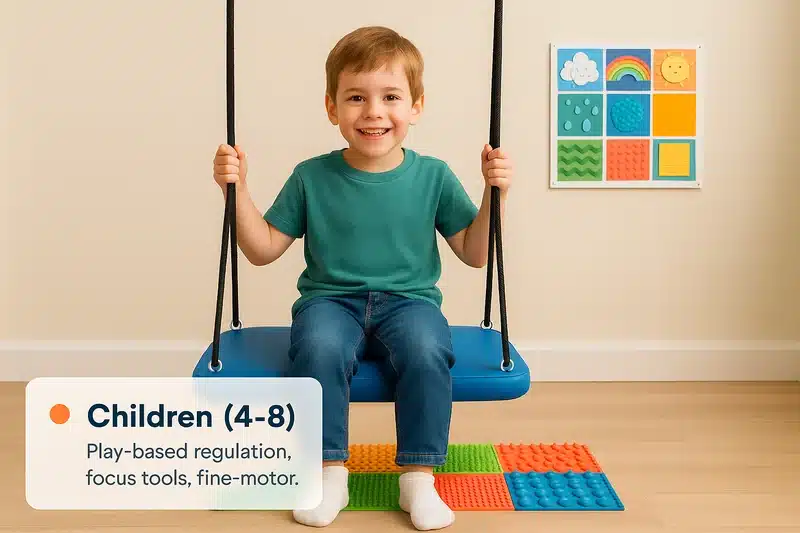
Kids
Best for active play, focus support, calming routines, sensory bins, fidgets, and home or classroom-friendly tools.
Common gift wins- Movement toys for rainy days or indoor breaks
- Quiet fidgets and hands-busy tools
- Calm corner, bedtime, and sensory play supplies

Teens
Best for discreet regulation, school-friendly focus, bedroom reset tools, headphones, and non-childish comfort gifts.
Common gift wins- Quiet fidgets that do not draw attention
- Headphones, lighting, and study supports
- Calming bedroom and wind-down tools
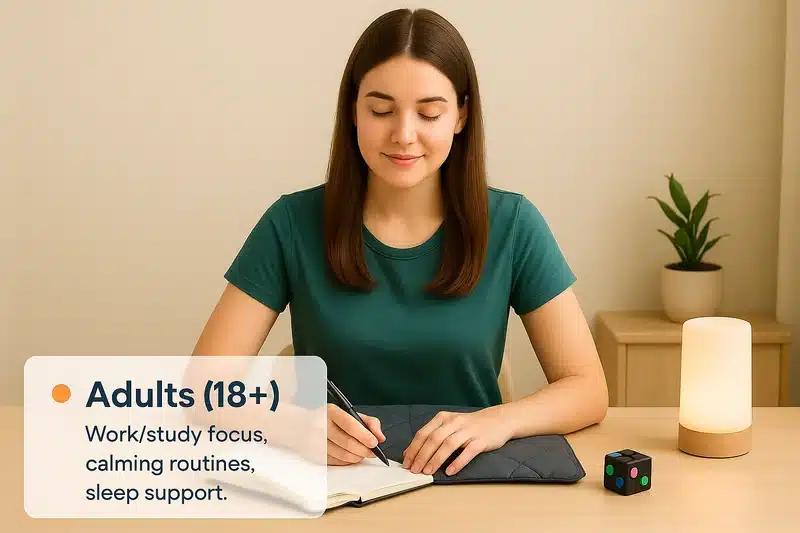
Adults
Best for useful, discreet sensory gifts for work, home, commuting, rest, and everyday self-regulation.
Common gift wins- Subtle fidgets and desk supports
- Weighted, compression, and deep-pressure tools
- Sound, light, sleep, and home comfort supports
How gift priorities change by age
The same sensory need can look very different across age groups. This quick comparison can help you avoid gifts that are too young, too intense, or not practical for the setting.
| Age range | Gift priority | Good directions | Watch out for |
|---|---|---|---|
| Babies and toddlers | Safe, supervised exploration | Large pieces, washable textures, gentle movement, simple cause-and-effect play | Small parts, loud toys, strong lights, hard-to-clean materials, anything unsafe for mouthing |
| Kids | Play, regulation, and skill-building | Fidgets, sensory bins, balance tools, swings, calm corner supplies, bedtime supports | Tools that need too much setup, toys that are too babyish, or items that are hard to use safely indoors |
| Teens | Discreet support and independence | Quiet fidgets, headphones, desk supports, bedroom reset tools, subtle compression, study-friendly lighting | Anything that feels childish, embarrassing, loud, bulky, or hard to bring to school |
| Adults | Comfort, function, and dignity | Desk supports, weighted blankets, lap pads, sound control, sleep tools, subtle movement options, calming home items | Toy-like gifts, novelty clutter, oversized equipment, or anything that ignores their actual routine |
Best age paths for common gift situations
Use these shortcuts when you are shopping for a birthday, classroom gift, travel support, or a more subtle sensory tool.
Best gifts for classrooms
Look for quiet, durable tools that can be used without disrupting a group setting. Kids and teens usually need different levels of discretion.
Best gifts for home
Home gifts can be bigger, cozier, or more routine-based. Think calm corners, sensory bins, bedtime supports, lighting, and movement breaks.
Best gifts for travel
Travel gifts should be portable, quiet, easy to clean, and simple to use in a car, plane, waiting room, hotel, or family visit.
Best subtle gifts for teens and adults
When dignity matters most, choose sensory tools that look like regular comfort, desk, sleep, or wellness items.
Need to shop by problem instead?
If you know the goal better than the age, use the need-based path. It is better for questions like “What helps with noise?”, “What can help with chewing?”, “What is good for movement?”, or “What should I put in a calm corner?”
Still unsure which age guide to use?
When you are buying for a child near an age cutoff, choose the guide that matches their daily life and safety needs more than their exact birthday. For example, a mature 9-year-old may fit some teen-friendly ideas, while a younger 4-year-old may still need toddler-safe choices.
Start with the best age match
Pick the closest age range, skim the best-for sections, and choose a gift that fits where the person will actually use it: home, school, travel, work, or wind-down time.