
Helping Picky Eaters (Sensory‑Friendly) — Free Picky Eater Test
Picky eating is common in autism, but it’s not just “being fussy.” Sensory sensitivities, anxiety, and routines can make new foods feel unsafe. This guide blends parent‑tested ideas and therapist‑backed strategies to expand variety without battles.
Note: This page is informational and not medical advice. Work with your pediatrician, occupational therapist, or feeding therapist for individualized support.
Why picky eating happens in autism
- Sensory sensitivities to textures, flavors, smells, visuals, or temperatures.
- Need for sameness—brand, shape, color, or plating must match expectations.
- Past scary experiences (gagging, vomiting, choking) make avoidance feel protective.
- Oral‑motor challenges with chewing, mixed textures, or fatigue while eating.
- GI discomfort or allergies create negative associations.
- Anxiety and demand pressure reduce appetite and trust at the table.
Picky Eater Test (Self‑Check)
This 2‑minute checklist screens for patterns often seen with typical picky eating, sensory‑driven eating, or signs that warrant a professional consult. It is not a diagnosis.
Picky eater vs. ARFID — what’s the difference?
Picky eaters usually eat at least ~30 foods and will regain foods after a “food jag” break. Growth is typical, and stress decreases with low‑pressure exposure.
Possible ARFID (Avoidant/Restrictive Food Intake Disorder) involves avoiding or restricting intake leading to weight/growth issues, nutrient deficiencies, or significant life interference. Drivers may include sensory characteristics of food or fear of adverse consequences (e.g., choking); body‑image concerns are not part of ARFID.
If you’re worried about growth, nutrition, or life disruption, ask your pediatrician for a referral to a feeding team (OT, SLP, RD, psychologist).
Build a plan for success
1) Food chaining
Start from a true “safe food,” then change only one feature at a time (brand → shape → flavor → preparation). Celebrate exploration, not bites.
2) Stepwise exposure
- On the plate → touch → smell → kiss/lick → tiny bite → bigger bite.
- Keep preferred “safe foods” at each meal.
3) Satter roles at the table
You: decide what/when/where. Your child: decides whether and how much. Removing pressure builds trust.
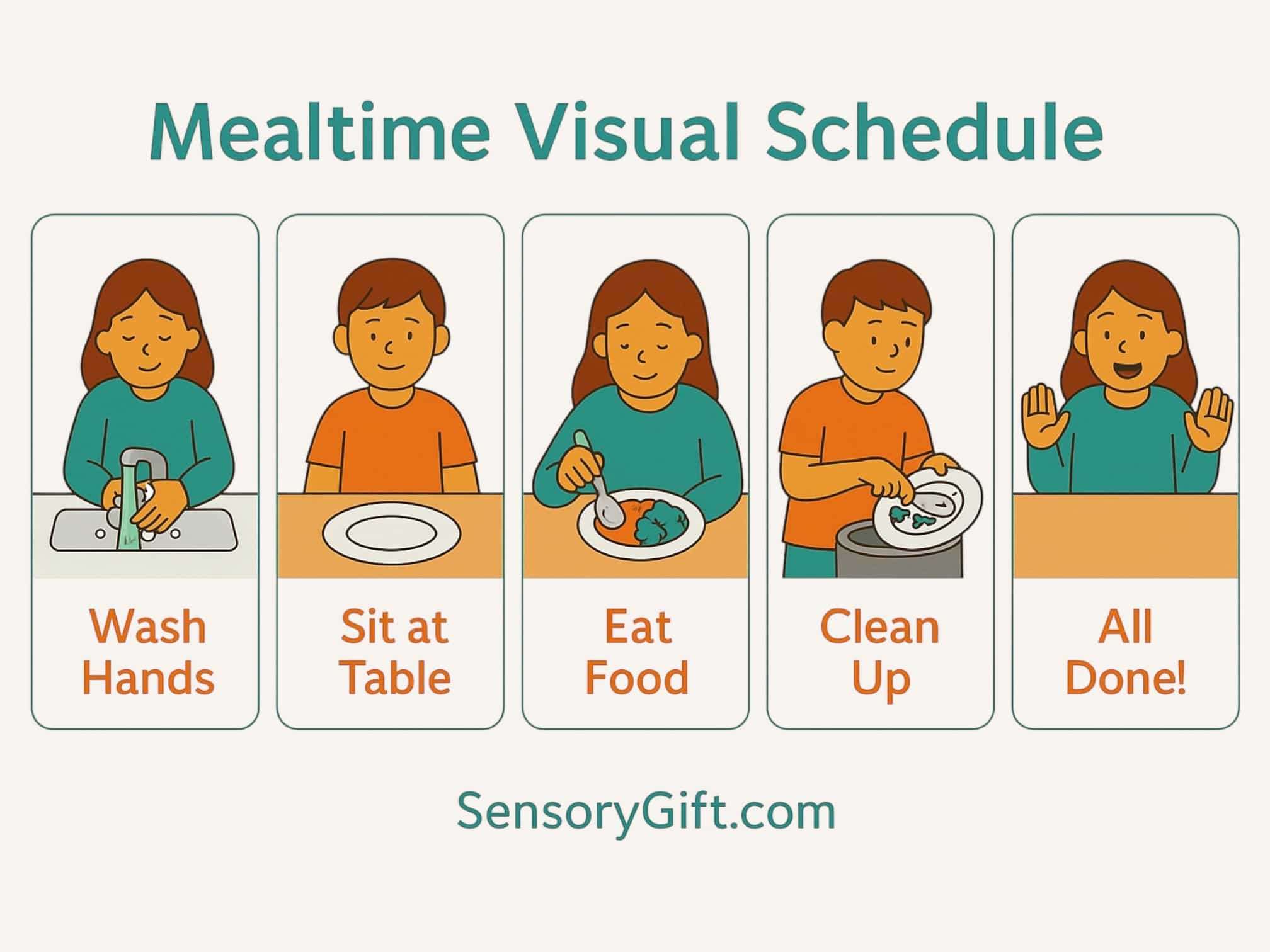
Printable visual schedule
Make meals predictable with a simple visual routine.
Printable Visual Mealtime Schedule

Sensory tools that help with mealtime
- Oral input tools before meals (chewelry, bubble blowing) to “wake up” the mouth.
- Heavy work (carry napkins, wall push‑ups) 5–10 min before eating.
- Messy play away from meals to build tolerance to textures.
- Calming extras: weighted lap pad, simple fidget, predictable routine.
Mealtime strategies
- Consistent schedule for meals and snacks.
- Limit grazing to build appetite.
- No bribing/pressuring—focus on exposure and exploration.
- Model trying bites calmly; end meals before overload.
- Celebrate tiny steps and repeat exposures.
Frequently Asked Questions
Is my child a picky eater or something more?
Picky eating often improves with low‑pressure exposure and routines. If your child eats fewer than ~20 foods, has growth/nutrition issues, or eating disrupts daily life, ask for a feeding evaluation.
What’s the safest way to start?
Keep safe foods on the table, add one “learning food,” and use a stepwise exposure ladder. End before meltdowns.
Do sensory tools actually help?
Yes—calming the body and making meals predictable (visuals, heavy work, familiar seating) reduces threat and supports trying.
Who treats feeding issues?
Feeding teams often include an OT or SLP (feeding therapist), a dietitian, and a psychologist, coordinated with your pediatrician.